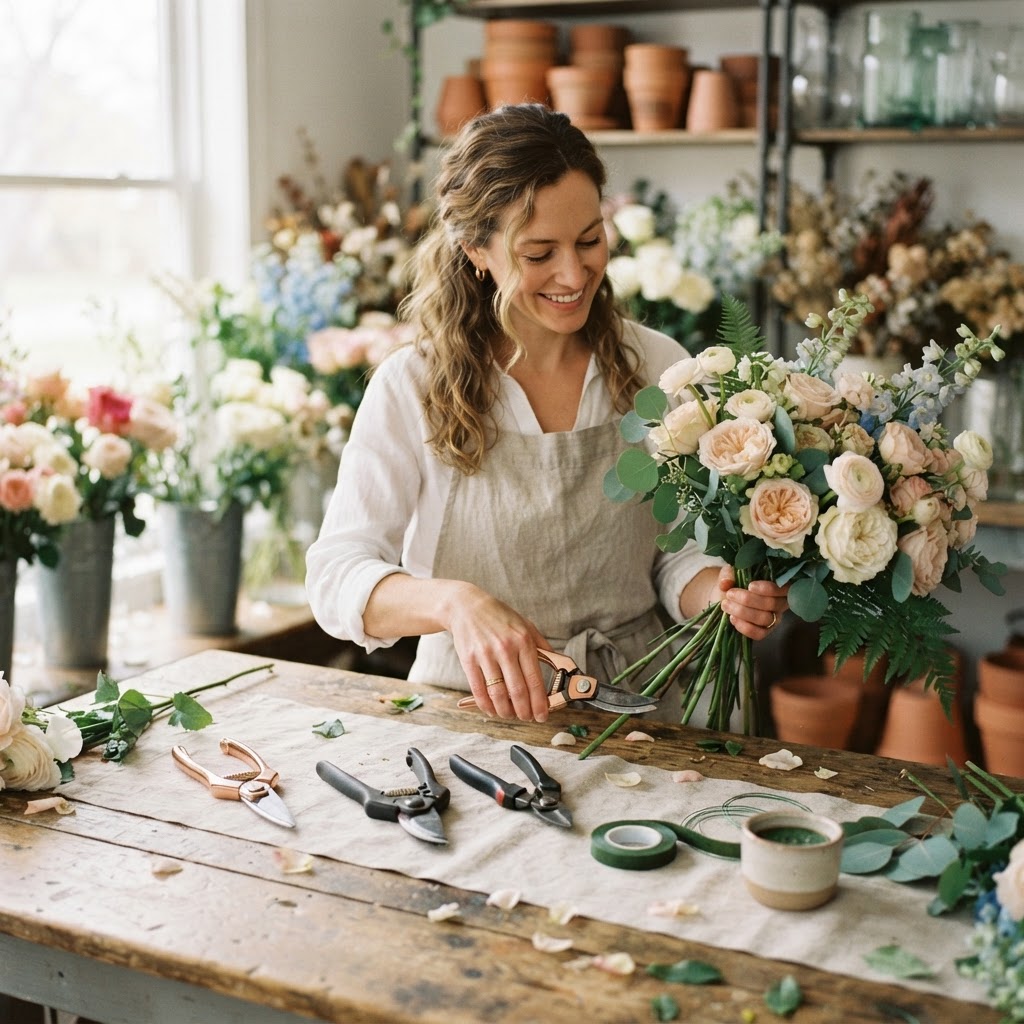
Stepping into the world of floral design is one of the most rewarding creative journeys you can embark on, whether you're crafting centerpieces for a dinner party or arranging blooms for a loved one's special day. Having the right tools in your hands transforms what might feel overwhelming into something deeply satisfying and beautiful. At Floral Moments, we've curated this guide to the top recommended floral design tools so you can start your floral journey with confidence, creativity, and style.
Why the Right Tools Make All the Difference
There's a certain magic that happens when a talented florist picks up the right pair of shears and begins transforming a bucket of fresh blooms into something extraordinary. But the truth is, that magic isn't reserved for professionals — it's accessible to anyone who starts with quality tools and a genuine desire to create. For beginners, investing in the right floral design equipment is not just practical; it's transformative. The wrong tools can bruise stems, crush delicate petals, and leave you frustrated with results that don't reflect your vision. The right ones, however, feel like natural extensions of your hands.
Floral design is both an art and a science. Understanding how to properly cut stems at an angle to maximize water absorption, how to secure arrangements so they hold their shape, and how to condition flowers for longer life — all of these techniques depend on having appropriate tools at your disposal. A beautiful arrangement starts long before the first bloom is placed; it begins the moment you gather your supplies.
Whether you're preparing for a Weddings centerpiece, decorating your home with seasonal stems (check out our Home Decor inspiration), or building skills you'll use for years to come, the tools you choose will shape every outcome. Think of your toolkit as a long-term investment in your craft — one that pays dividends in every bouquet, every vase, every floral moment you create. Browse our Recommended Products page for vetted options we love.
Floral Scissors and Stem Cutters: Your Most Essential Tool
If there is one tool that every beginner absolutely must prioritize, it is a pair of high-quality floral scissors or stem cutters. Unlike standard household scissors, professional floral scissors are designed with razor-sharp, micro-serrated blades that cut through stems cleanly without crushing the delicate vascular tissue that carries water up through the flower. This clean cut is critical — a crushed stem cannot absorb water efficiently, which shortens the life of your arrangement significantly.
Look for scissors made from stainless steel or Japanese high-carbon steel, as these materials hold their edge longer and are resistant to the moisture and sap they'll regularly encounter. Ergonomic handles are also worth prioritizing, especially if you plan to spend extended time arranging. Brands like Niwaki, Fiskars, and Okatsune are widely respected in the floral design community and offer excellent options at beginner-friendly price points.
For thicker woody stems — think roses, lilacs, or branches used in dramatic arrangements — you may also want to invest in bypass pruning shears. These work like scissors but are designed to handle tougher material with ease. The bypass mechanism (where one blade passes alongside the other rather than meeting it) results in a cleaner cut than anvil-style pruners, which can crush stems.
Caring for your cutting tools is just as important as choosing them. Rinse blades after each use, dry them thoroughly to prevent rust, and sharpen them regularly. A well-maintained pair of floral scissors can last years and remain one of your most beloved creative companions. Visit our Blog for tips on tool maintenance and care.
Floral Foam and Mechanics: The Hidden Foundation of Great Arrangements
Behind every seemingly effortless arrangement is a thoughtful structure holding everything in place — and that structure usually involves floral foam, chicken wire, or a combination of both. Floral mechanics, as these support systems are called, are what allow designers to place stems at precise angles, create visual depth, and ensure that even the most ambitious compositions remain stable and hydrated.
Traditional floral foam, such as the iconic green OASIS foam, has long been the industry standard for fresh flower arrangements. It absorbs water and holds stems securely, making it ideal for table centerpieces, funeral sprays, and structured designs. To use it correctly, soak the foam fully in water before inserting stems — never force it underwater, as this creates air pockets that prevent proper absorption. Simply allow it to sink naturally in a basin of room-temperature water.
However, as sustainability becomes an increasing priority in the floral industry, many designers are turning to eco-friendly alternatives. Products like Agra-Wool, Kenzan pin frogs, and reusable chicken wire grids offer excellent support without contributing to microplastic pollution. Kenzan pin frogs, in particular, are beautiful Japanese tools that sit at the bottom of a vase and hold stems upright through a grid of sharp pins — they're precise, reusable, and perfectly suited to the Ikebana-inspired minimalist arrangements that pair so well with modern Home Decor.
For beginners, starting with a mix of foam for structured pieces and a pin frog for loose, vase-based arrangements gives you versatility across different design styles. You'll find curated mechanics options in our Recommended Products section.
Floral Wire, Tape, and Binding Supplies
Wiring and taping are foundational techniques in professional floral design, and the supplies used to execute them are deceptively simple but enormously impactful. Floral wire is used to reinforce fragile stems, create extensions on short-stemmed flowers, shape petals and leaves, and build corsages, boutonnieres, and bridal bouquets. It comes in a variety of gauges — the higher the number, the finer and more flexible the wire. Beginners typically find a selection of 22, 24, and 26-gauge wires to be a versatile starting set.
Floral tape — often called stem wrap or parafilm — is a self-adhesive, slightly stretchy tape that bonds when stretched and pressed. It seals wired stems, holds together hand-tied bouquet stems, and gives a polished, professional finish to wired work. It's available in green, white, brown, and even champagne tones, making it easy to match different floral palettes.
For bouquet-making and garland creation, binding wire (or paddle wire) is your best friend. This thin, continuous wire winds around a paddle and allows you to quickly and efficiently bind stems together as you work. It's especially useful for creating the cascading bridal bouquets and elaborate garlands you might see in our Weddings feature stories.
Rounding out your binding toolkit: waterproof floral tape for securing foam to vessels, bind wire in natural raffia for a rustic aesthetic, and pearl-headed corsage pins for securing wristlets and boutonnieres. These small investments make a big difference in the quality and longevity of your finished designs, particularly for gifting occasions — explore our Gift Guides for ideas on presenting handcrafted floral pieces beautifully.
Vases, Vessels, and Containers: Form Meets Function
The vessel that holds your arrangement is not merely a container — it is an integral part of the design itself. A thoughtfully chosen vase can elevate the simplest handful of wildflowers into something gallery-worthy, while a poorly chosen one can undermine even the most carefully crafted composition. As a beginner, building a small but versatile collection of vessels will expand your creative possibilities enormously.
Start with a classic clear glass cylinder vase in a medium height — approximately 8 to 10 inches. Its transparency allows you to appreciate stem placement and water quality, and it complements virtually every floral style from lush English garden arrangements to spare, modern minimalism. From there, consider adding a low, wide-mouthed compote or bowl vase for garden-style arrangements where blooms can spill naturally outward, and a tall, narrow bud vase for single stems or intimate accent pieces.
For those drawn to more eclectic aesthetics, vintage vessels add personality and charm. Estate sales, antique markets, and thrift stores are wonderful sources for unique ceramic pitchers, mercury glass urns, and apothecary bottles that make stunning, unexpected floral homes. Mixing textures — matte ceramic beside polished glass, raw terracotta beside gilded metal — creates arrangements with visual richness that photographs beautifully.
If you're arranging flowers for special Occasions like a birthday dinner or holiday gathering, consider your tablecloth, linens, and overall setting when selecting your vessel. The goal is harmony — your arrangement should feel like it belongs in the space, not as though it has been placed there as an afterthought. Explore vessel collections and styling ideas on our Home Decor pages for further inspiration.
Water Tubes, Bouquet Holders, and Specialty Tools
As your floral design practice grows, you'll encounter situations that call for more specialized equipment. Water tubes — small, rubber-capped plastic tubes that hold water and a single stem — are indispensable for extending the life of flowers in corsages, boutonnieres, or wearable floral pieces where stems cannot reach a water source. They're also useful for inserting individual blooms into wreaths or garlands without foam.
Bouquet holders with built-in water reservoirs are a game-changer for bridal and event work. These foam-filled, handled forms allow you to build a structured bouquet while keeping flowers hydrated right up until the moment they're carried down the aisle. They're a staple for anyone beginning to explore Weddings floral design and event work.
Leaf strippers and thorn removers are small, handheld tools that quickly and safely remove foliage and thorns from rose stems without damaging the stem itself. They save considerable time when processing large quantities of roses and protect your hands from pricks — a genuinely underrated quality-of-life tool for anyone who works with roses frequently.
A quality misting bottle is also worth mentioning. Keeping flowers lightly misted during the arranging process, particularly in warm or air-conditioned environments, helps prevent wilting and keeps petals looking fresh and dewy. Choose one with a fine mist setting rather than a strong stream.
Finally, a professional flower bucket or pail — taller and sturdier than a standard household bucket — allows you to properly condition and store stems in deep water before arranging. Conditioning flowers (allowing freshly cut stems to hydrate for several hours before designing) dramatically improves arrangement longevity. Browse our Recommended Products page to find our favorite specialty tools at every budget level.
Building Your Beginner Floral Toolkit: Where to Start
With so many wonderful tools available, it can feel tempting to purchase everything at once — but a focused, intentional approach will serve you better as a beginner. Start with the absolute essentials: a pair of quality floral scissors, a set of three versatile vases, a block of floral foam and a pin frog, a basic wiring kit with tape, and a conditioning bucket. This core toolkit will allow you to execute a wide range of designs and develop foundational skills without overwhelming yourself with equipment.
As your confidence grows and your design style begins to emerge, you can add specialty tools that align with the kind of work you love most. Are you drawn to structured, formal arrangements? Invest in a wider variety of foam mechanics and bouquet holders. Do you prefer loose, wildflower-inspired styles? Expand your vessel collection and explore different vase shapes and sizes. Passionate about wearable flowers for weddings and events? Build out your wiring supplies and water tube inventory.
Quality over quantity is the guiding principle here. One exceptional pair of scissors outperforms three mediocre ones, and a single beautiful ceramic vessel can inspire more creativity than a shelf full of uninspiring containers. Shop thoughtfully, care for your tools diligently, and let your collection grow organically alongside your skills.
For gifting inspiration — whether you're treating yourself or a floral-loving friend — our Gift Guides feature beautifully curated tool sets and starter kits that make the perfect introduction to floral design. And for seasonal design inspiration that will put your new tools to work, visit our Occasions and Blog pages regularly. At Floral Moments, we believe that every arrangement tells a story — and the right tools help you tell yours with beauty and intention.
Frequently Asked Questions
⭐ Recommended Products
Looking for products we personally recommend for this niche?
See our complete list of trusted tools and recommended products.
Browse Recommended Products